Showing all 24 results

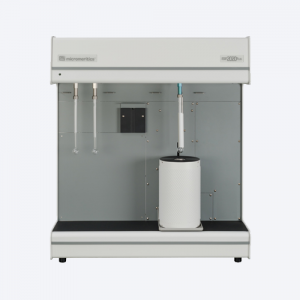
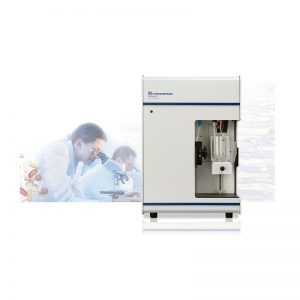
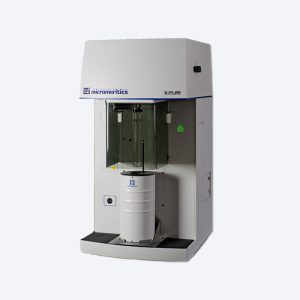
3Flex Physisorption

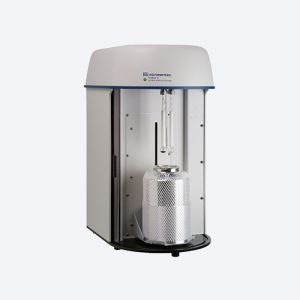
High Resolution, High-throughput Physisorption and Chemisorption Instrument

Recognized as the most advanced instrument in the field for material surface characterization. The 3Flex has become a crucial tool for providing high resolution adsorption, desorption, isotherms to advance and validate fundamental understanding into development of methodologies and process improvements.
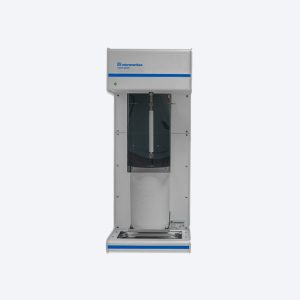
AccuPyc II 1345

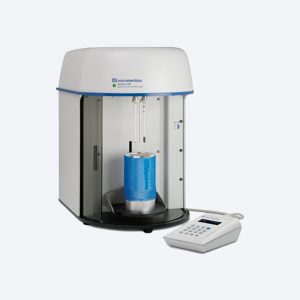
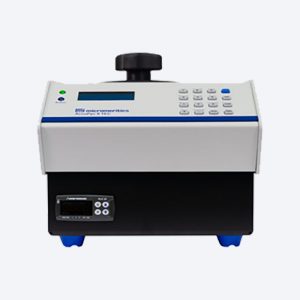
Gas pycnometry is recognized as one of the most reliable techniques for obtaining true, absolute, skeletal, and apparent volume and density. This technique is non-destructive as it uses the gas displacement method to measure volume. Inert gases, such as helium or nitrogen, are used as the displacement medium. Density calculations using the gas displacement method are much more accurate and reproducible than the traditional Archimedes water displacement method.

ASAP2020 Plus Chemisorption

ASAP2020 Plus Chemisorption Option -Accelerated Surface area & Porosimetry System

The ASAP 2020 Plus Chemisorption option permits you to obtain valuable information about the physical and chemical properties of your catalyst, catalyst support, adsorbents, and other materials. Its unique design provides a high level of system cleanliness to permit low-pressure chemisorption isotherms.

ASAP2020 Plus Physisorption

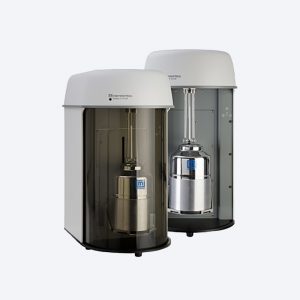
Accelerated Surface Area and Porosimetry System – Sophisted Design, Intuitive Operation, Research-Grade Results:

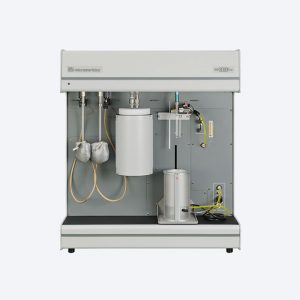
The Micromeritics ASAP 2020 Plus integrates a variety of automated gas sorption techniques into a single, but powerful, table top instrument. The system is designed to provide high-quality surface area, porosity, and chemisorption isotherm data to materials analysis laboratories with ever-expanding analytical requirements.

ASAP2020A

ASAP2020A Accelerated Surface area & Porosimetry System

The new expansion module ASAP 2020A not only extends the life of the ASAP 2020 base units , it adds significant new capabilities to the original systems. Whether the ASAP 2020 was configured for use with nitrogen (only), or utilized extra vacuum, or was configured to use krypton for low surface area measurements, or was used for chemisorption – the new ASAP 2020A is for you.

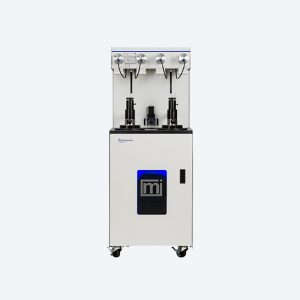
Autopore V series

AutoPore V – Mercury Intrusion Porosimetry

Class Leading, Proven Performance Establishing a New Benchmark for Operational Safety

The mercury porosimetry analysis technique is based on the intrusion of mercury into a porous structure under stringently controlled pressures. Besides offering speed, accuracy, and a wide measurement range, mercury porosimetry permits you to calculate numerous sample properties such as pore size distributions, total pore volume, total pore surface area, median pore diameter and sample densities (bulk and skeletal).

DCA-200

SEO DCA 200 Series Analyzers

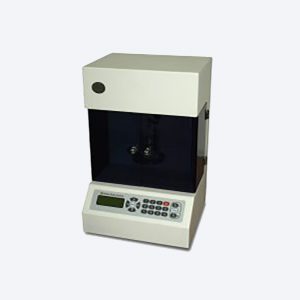
The SEO DCA series analyzer offer a powerful. And versatile approach to comprehensive understanding of the complex interaction at liquid-liquid and liquid-solid surfaces. Whether you need to improve adhesion, apply a coating, or modify a surface, a SEO DCA system provides the solution.

DST-30

The information of surface or the interfacial tension is critically important in applications such as detergency and emulsification and is also important for many biological processes. Especially, the Du NÕuy Ring method and the Wihelmy Plate method are commonly used for measuring surface / interfacial tensions.

The DST A series are precise tension meters (with Digital LCD display) for the measurement of surface (Liquid – Vapour) & interfacial tensions (Liquid – Liquid) using both the Du NÕuy ring and the Wihelmy plate.

DST-60

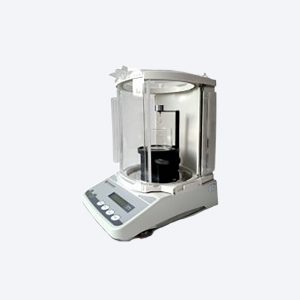
The DST M series is designed for Educational, Quality Control and other multiple user applications. By simply operating the sample stage manually, you can get the surface / interfacial tension results quickly with no additional calculations.

ELSZ 2000

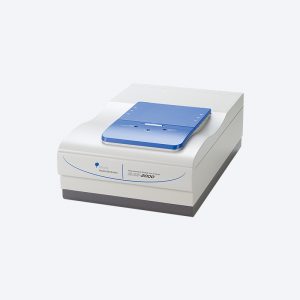
Otsuka Electronics – ELSZ-2000 Nano Particle, Zeta Potential & Molecular Weight Analyzer

Outstanding performance, sensitivity, compact bench-top footprint, and intuitive software make the ELSZ-2000 series of products the preferred choice in determining particle size and zeta potential on a wide variety of materials.

Elzone II 5390

Elzone II 5390 Particle Size Analyzer

Widely accepted as a primary particle characterization technique, the electrical sensing zone method is recognized as a highly effective method of counting and sizing a wide variety of organic and inorganic materials.Unlike other measurement techniques, the electrical sensing zone method can analyze samples that have assorted optical properties, densities, colors, and shapes. Micromeritics’ Elzone particle size analyzer uses this powerful particle characterization technique to determine quickly and accurately the size, number, concentration, and mass of finely divided materials. The instrument determines particle size in a range suitable for a wide variety of  industrial, biological, and geological specimens down to 0.4 μm. The Elzone’s high-level of accuracy and resolution, speed, and ease of use make it equally suitable for industry, quality control,and research and development laboratories.

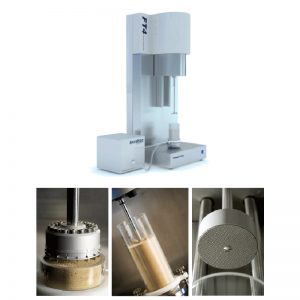
FT4 Powder Rheometer

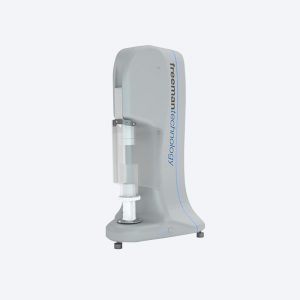
The FT4 Powder Rheometer – a universal powder flow tester for measuring powder flow properties and powder behaviour.

The FT4 was designed with one purpose in mind – to characterise the rheology of powders, or powder flow properties. This remains a primary function today, but the instrument, accessories and methodologies have been continuously developed to the point where the FT4 is now considered a universal powder flow tester.

Gemini VII 2390

Gemini VII 2390 Surface Area Analyzer

Unique Design – The secret of Gemini’s unique capabilities lies in the innovative use of sample and balance tubes. These tubes are identical in every aspect, including their thermal environment. The sample and reference reservoirs, like their associated tubes, are physically identical and are initially charged to the same pressure. During an analysis, differential pressure between reservoirs is monitored. This common mode technique assures that any differential pressure is solely due to adsorption by the sample and not to factors that lead to variations in free space during an analysis.

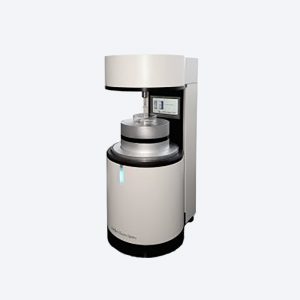
GeoPyc 1365

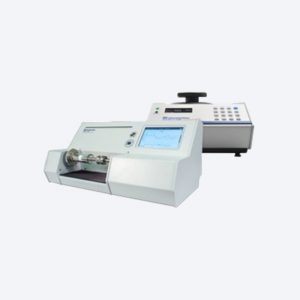
The GeoPyc employs a unique displacement measurement technique that uses Dry Flo, a quasi-fluid composed of small, rigid spheres having a high degree of flow-ability. The sample is placed in a bed of Dry Flo which is agitated and gently consolidated about the sample. The GeoPyc collects the displacement data, performs the calculations, and displays or prints the results.

  • Highly accurate and reproducible results
  • Fast operation in a small bench-top instrument
  • Fully automated data acquisition and reporting
  • Nondestructive analysis maintains sample integrity
  • Intelligent touch panel for ease of operation and reporting

HPVA II

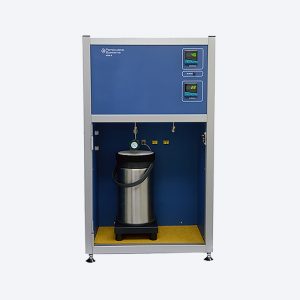
The HPVA II Series of adsorption analyzers from Particulate Systems uses the static volumetric method to obtain high-pressure adsorption and desorption isotherms utilizing gases such as hydrogen, methane, and carbon dioxide. The volumetric technique consists of introducing [dosing] a known amount of gas [adsorptive] into the chamber containing the sample to be analyzed.

When the sample reaches equilibrium with the adsorbate gas, the final equilibrium pressure is recorded. These data are then used to calculate the quantity of gas adsorbed by the sample.

MIC SAS II

Developed as a direct and improved successor to the widely used Fisher Model 95 Subsieve Sizer (FSSS), the Micromeritics SAS II has improved the FSSS’s performance by offering easy-to-use automated functions together with electronically recorded data.

Saturn DigiSizer II

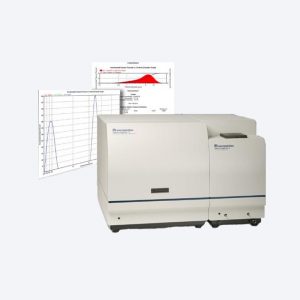
The Saturn DigiSizer®II is the first commercially available particle sizing instrument to employ the light scattering analysis technique that utilizes advanced digital detection technology to deliver exceptionally high levels of resolution, accuracy, repeatability, and reproducibility. A state-of-the-art CCD detector containing over three million detector elements enables the completely automated Saturn DigiSizer II to capture a high resolution, digital representation of the pattern produced as a result of laser light scattered from a sample. The resulting information is then processed using data reduction based on Mie theory. The instrument produces fast, detailed results that are repeatable on and reproducible between every Saturn DigiSizer.

Sedigraph III Plus

Sedigraph III Plus Particle Size Analyzer

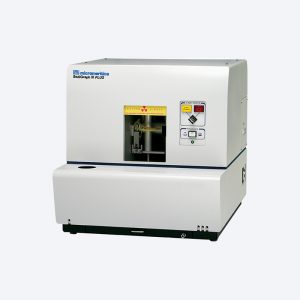
The new SediGraph® III Plus determines particle size by using the highly accurate and reproducible sedimentation technique which measures the gravity-induced settling rates of different size particles in a liquid with known properties. This is simple yet extremely effective technique for providing particle size information for a wide variety of materials.

Sentinel Pro

Dynamic Image/Particle Shape Analyzer

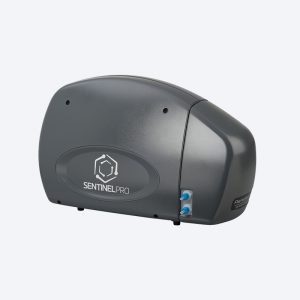
The SentinelPro is a class-leading dynamic image analyzer that is ideal for applications where particle shape, not just the particle size, may be critical information for predicting raw material quality and to maintain a high level of process control.

Particle morphology provides important information regarding the physical shape properties of your sample. It has been shown that shape can affect flowability, dispersion, packing density, segregation, aggregate formation, and microstructure character.

The fully automated SentinelPro is a well-suited research grade instrument or for use in a full production environment where speed, accuracy, and ease of use with its Pass/Fail shape control limits feature can be utilized.

SPECTester

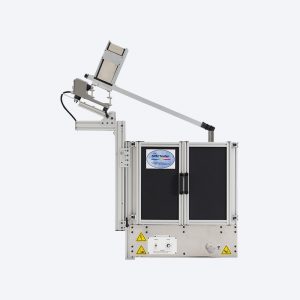
SPECTester – Innovative Segregation Tester

Most manufactured products today are mixtures of several components. Generally, the individual ingredients in a mixture will separate (segregate) during the manufacturing process which results in an inconsistent final product. Segregation, or separation, of granular powder materials is one of the main causes of process failure with systems that handle powder materials. Conservative estimates suggest up to 30% of all unscheduled downtimes are due to segregation and quality issues.

SSSSpin Tester

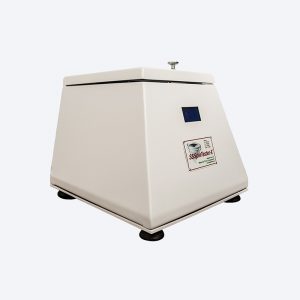
Powder Strength Tester for early detection of flowability challenges in formulation development

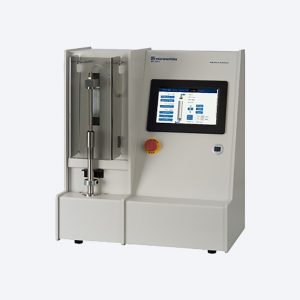
Using the science of centrifugal force, the fully automated SSSpinTester measures the unconfined yield strength of fine powders The instrument only requires a very small amount of sample, less than 0.5cc of material. This is an important feature of the instrument’s utility for accurately and automatically measuring precious sample and expensive APIs for pharmaceutical formulation development.

Tristar II Plus

Tristar II Plus Surface Area and porosity Instrument


Surface Area and Porosity Instrument

Analytical Versatility/ High Throughput/ Small Footprint

The TriStar II Plus is a an automated, three-station, surface area and porosity analyzer that delivers excellent performance and speed of analysis. With three available analysis ports, the TriStar II Plus provides high sample through-put and advanced data analysis features to the user. The unique stainless steel analysis manifold is corrosive resistant and designed for highly accurate gas management for confident and repeatable results.

Tristar II Series

Tristar II Series Surface Area and Porosity Instrument

Surface Area and Porosity Instrument
Analytical Versatility/ High Throughput/ Small Footprint

The TriStar II is a fully automated, three-station, surface area and porosity analyzer that delivers high-quality data at an affordable price. The TriStar II also features a Krypton Option, allowing measurements in a very low surface area range.

Uniaxial Powder Tester

Assess and Rank Powder Flowability

The Uniaxial Powder Tester (UPT) is a stand-alone uniaxial shear tester for simple, sensitive and cost effective powder characterisation. This powder flow tester delivers repeatable and reliable measurements, providing a robust alternative to traditional powder testing techniques.