
Lithium-Ion Battery Technology

The Lithium-ion battery is an energy storage device capable of almost continuous charging and discharging. In comparison to traditional battery technologies, lithium-ion batteries provide a significantly higher performance and efficiency In terms of application. The lithium-ion battery market can be segmented into consumer electronics, automotive, storage grid energy, and industrial use.

Improving global economic conditions, rising disposable income, the need for clean energy and surging demand for quality and uninterrupted power are a few of the major factors anticipated to boost demand for lithium-ion battery. The power density, safety, recharge time, cost, and other aspects of its technology are expected to continue to advance.

Videos

The Electric Car - Lithium Ion Battery Technology

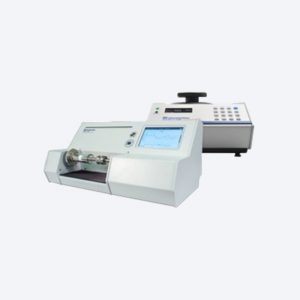
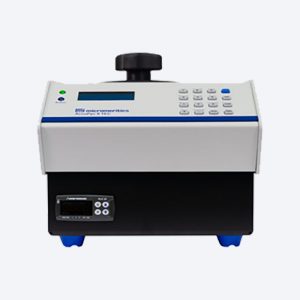
AccuPyc II 1345

Gas pycnometry is recognized as one of the most reliable techniques for obtaining true, absolute, skeletal, and apparent volume and density. This technique is non-destructive as it uses the gas displacement method to measure volume. Inert gases, such as helium or nitrogen, are used as the displacement medium. Density calculations using the gas displacement method are much more accurate and reproducible than the traditional Archimedes water displacement method.
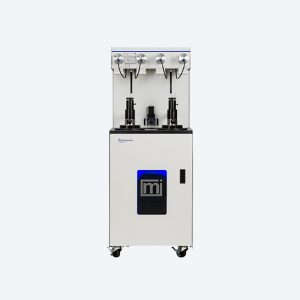
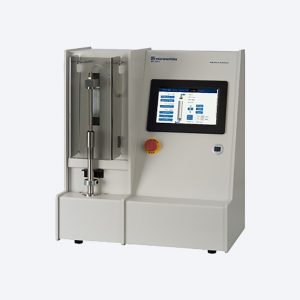
Autopore V series

AutoPore V – Mercury Intrusion Porosimetry

Class Leading, Proven Performance Establishing a New Benchmark for Operational Safety

The mercury porosimetry analysis technique is based on the intrusion of mercury into a porous structure under stringently controlled pressures. Besides offering speed, accuracy, and a wide measurement range, mercury porosimetry permits you to calculate numerous sample properties such as pore size distributions, total pore volume, total pore surface area, median pore diameter and sample densities (bulk and skeletal).

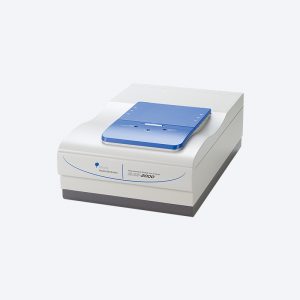
ELSZ 2000

Otsuka Electronics – ELSZ-2000 Nano Particle, Zeta Potential & Molecular Weight Analyzer

Outstanding performance, sensitivity, compact bench-top footprint, and intuitive software make the ELSZ-2000 series of products the preferred choice in determining particle size and zeta potential on a wide variety of materials.

GeoPyc 1365

The GeoPyc employs a unique displacement measurement technique that uses Dry Flo, a quasi-fluid composed of small, rigid spheres having a high degree of flow-ability. The sample is placed in a bed of Dry Flo which is agitated and gently consolidated about the sample. The GeoPyc collects the displacement data, performs the calculations, and displays or prints the results.

  • Highly accurate and reproducible results
  • Fast operation in a small bench-top instrument
  • Fully automated data acquisition and reporting
  • Nondestructive analysis maintains sample integrity
  • Intelligent touch panel for ease of operation and reporting

MIC SAS II

Developed as a direct and improved successor to the widely used Fisher Model 95 Subsieve Sizer (FSSS), the Micromeritics SAS II has improved the FSSS’s performance by offering easy-to-use automated functions together with electronically recorded data.

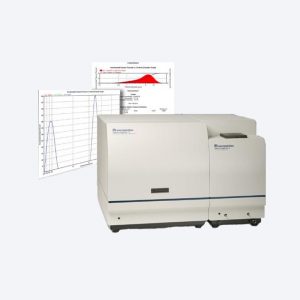
Saturn DigiSizer II

The Saturn DigiSizer®II is the first commercially available particle sizing instrument to employ the light scattering analysis technique that utilizes advanced digital detection technology to deliver exceptionally high levels of resolution, accuracy, repeatability, and reproducibility. A state-of-the-art CCD detector containing over three million detector elements enables the completely automated Saturn DigiSizer II to capture a high resolution, digital representation of the pattern produced as a result of laser light scattered from a sample. The resulting information is then processed using data reduction based on Mie theory. The instrument produces fast, detailed results that are repeatable on and reproducible between every Saturn DigiSizer.

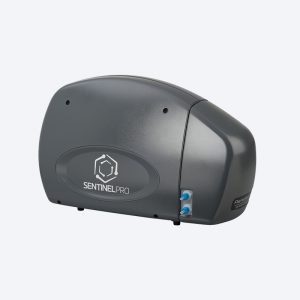
Sentinel Pro

Dynamic Image/Particle Shape Analyzer

The SentinelPro is a class-leading dynamic image analyzer that is ideal for applications where particle shape, not just the particle size, may be critical information for predicting raw material quality and to maintain a high level of process control.

Particle morphology provides important information regarding the physical shape properties of your sample. It has been shown that shape can affect flowability, dispersion, packing density, segregation, aggregate formation, and microstructure character.

The fully automated SentinelPro is a well-suited research grade instrument or for use in a full production environment where speed, accuracy, and ease of use with its Pass/Fail shape control limits feature can be utilized.

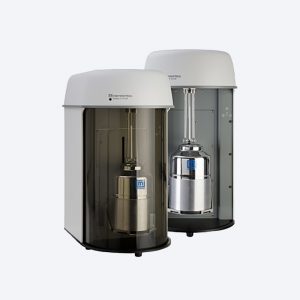
Tristar II Plus

Tristar II Plus Surface Area and porosity Instrument


Surface Area and Porosity Instrument

Analytical Versatility/ High Throughput/ Small Footprint

The TriStar II Plus is a an automated, three-station, surface area and porosity analyzer that delivers excellent performance and speed of analysis. With three available analysis ports, the TriStar II Plus provides high sample through-put and advanced data analysis features to the user. The unique stainless steel analysis manifold is corrosive resistant and designed for highly accurate gas management for confident and repeatable results.

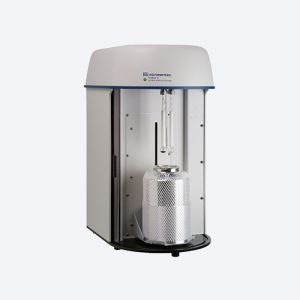
Tristar II Series

Tristar II Series Surface Area and Porosity Instrument

Surface Area and Porosity Instrument
Analytical Versatility/ High Throughput/ Small Footprint

The TriStar II is a fully automated, three-station, surface area and porosity analyzer that delivers high-quality data at an affordable price. The TriStar II also features a Krypton Option, allowing measurements in a very low surface area range.